Is Your Home Office Deduction Protected?
What Phoenix business owners should review when a workspace serves more than one purpose
Your home office may be where you send estimates, manage appointments, and keep your business moving. But when that same space becomes a family computer station, a second workplace, or a shared desk, the tax treatment deserves another look.
For a self-employed business owner, a qualifying home office can support a federal income tax deduction. The important question is how the space is actually used. A room labeled “office” on a floor plan does not establish eligibility, and paying household expenses through a business account does not make them deductible.
For business owners across the Phoenix Valley, reviewing the arrangement before tax season gives you time to document the facts and make sensible changes going forward.
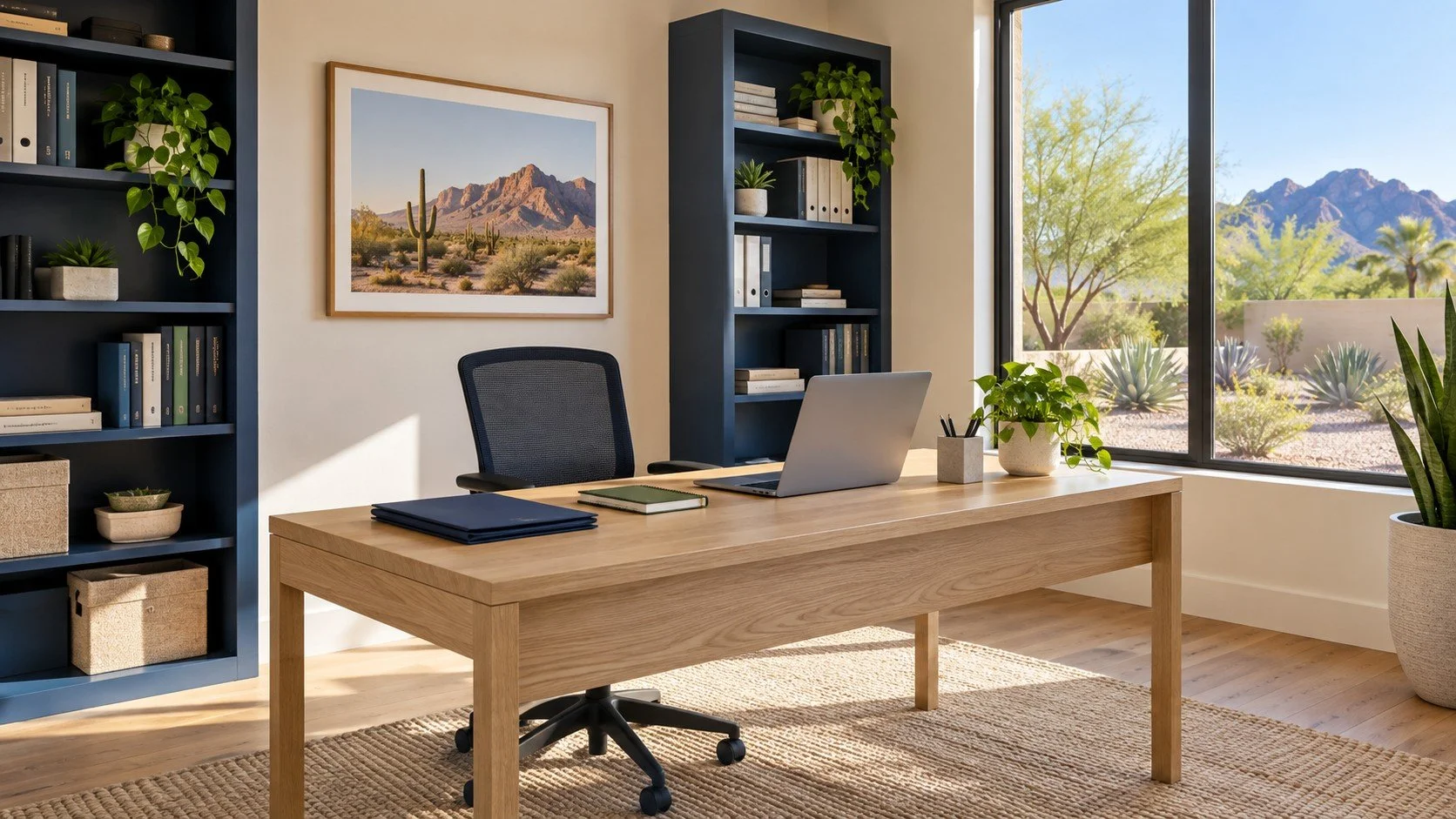
A Dedicated Space With a Business Purpose
For the usual home-office deduction, a specific area must be used regularly and exclusively for your trade or business. It does not have to be an entire room or have a permanent partition. A clearly identifiable portion of a room can qualify, but personal use of that same area generally conflicts with the exclusive-use requirement.
The space must also meet a qualifying business-use test, such as serving as your principal place of business. A home office used for administrative or management work can qualify under that test when you have no other fixed location where you conduct substantial administrative or management activities. Working at customer locations does not automatically rule it out.
Special rules apply to certain inventory storage and daycare uses. Those exceptions should not be assumed to cover an ordinary desk or spare bedroom.
A Second Business Needs Its Own Review
You can use one home office for more than one business, but eligibility is evaluated separately for each activity. The fact that one business qualifies does not settle the treatment of another.
Consider a hypothetical consultant who also operates a separate service business. Both activities may use the same desk, but the tax review still needs to consider what work happens there for each business and whether each use meets the applicable requirements. Expenses also need a reasonable allocation; the same cost cannot be deducted twice.
Current records make that conversation easier. Our bookkeeping and tax services help connect the activity in your business with the information needed for tax preparation.
Sharing With a Spouse or Using the Space for a W-2 Job
Sharing an office does not automatically settle whether a deduction is available. What matters is who uses the space, for which activities, and whether the claimed area remains devoted to qualifying business use. Clearly separate work areas can make the facts easier to establish, but a second desk alone does not guarantee eligibility.
W-2 employment requires particular care. Employees generally cannot claim a federal home-office deduction for unreimbursed employee expenses. Having a W-2 job does not, by itself, disqualify a separate self-employed business. However, using the same claimed area for employee work introduces an additional issue that should be reviewed before a deduction is taken.
Describe the actual arrangement to your tax professional, including occasional personal use and shared equipment. A complete picture is more useful than an office label.
The Connection to Business Mileage
A qualifying home office can affect transportation deductions as well. When your home office qualifies as your principal place of business, travel between that office and another work location in the same trade or business can generally be deductible.
That does not turn every trip from home into a business trip. Personal errands remain personal, ordinary commuting is generally nondeductible, and the business purpose and mileage still need to be documented. Keep a mileage record rather than relying on an estimate at year-end.
Choose a Method After Checking the Facts
Eligible taxpayers may use the simplified method or calculate qualifying actual expenses. The simplified method generally uses $5 per square foot, up to 300 square feet, subject to income and other limitations.
The actual-expense method requires support for the business share of eligible household costs and can involve depreciation.
The easier calculation is not always the most useful choice. Review the methods with your tax professional, especially if you moved, changed the size of the office, or used it for only part of the year.
Corporate owner-employees also need separate guidance on whether properly substantiated employer reimbursements under an accountable plan are appropriate.
Review Your Setup Before Filing
Keep measurements, a description of each business activity, the dates the space was used, and supporting expense records. Revisit those details when a spouse begins working from home or your business changes.
Numbers Matter Tax & Accounting helps Phoenix business owners bring their bookkeeping and tax planning into the same conversation. Schedule a free financial strategy call to discuss your home-office arrangement and the records needed to support it.
Frequently Asked Questions
Does a home office have to be a separate room?
No. A separately identifiable area can qualify without a permanent partition. For an ordinary office, that area still needs to satisfy the regular-use, exclusive-use, and applicable business-use requirements.
Can I qualify if I also have a W-2 job?
Possibly, for a qualifying self-employed business. W-2 employment alone does not eliminate that possibility. Using the same claimed space for both activities requires a closer review, and unreimbursed employee home-office costs generally are not deductible on a federal return.
Can two businesses deduct the same office expenses?
Qualifying uses may share a space, but expenses must be allocated appropriately. The same expense cannot be claimed twice.
This article provides general federal tax information, not individualized tax advice. Your filing treatment depends on your facts and applicable law.